
“Imagination is an essential tool of the mind, a fundamental way of thinking, an indispensable means of becoming and remaining human.”
—Ursula K. Le Guin, Words Are My Matter: Writings About Life and Books, 2000—2016 (2016), “The Operating Instructions”.
I would like to take these words as a starting point for an invitation: a call to a collective exercise of imagination, to think differently.
If we want to transform the structures that organize our lives and our ways of acting, we must first be able to imagine the world in a different way. No profound transformation begins with a new technology or a new institution; it begins with a modification of our ability to think.
Perhaps one way to initiate this shift is to return to world experiences that precede the logic imposed by the technological, economic and political discourses that today dominate public space. To return, for example, to certain moments in children's literature, not as a gesture of nostalgia, but as a practice of desynchronization. In these stories we find other temporalities, other relationships between beings, other ways of understanding intelligence, language and coexistence. Where instrumental thinking requires effectiveness, predictability and performance, imagination introduces uncertainty, play, listening and possibility.
I propose to understand imaginative studies as a collective practice. Not a discipline dedicated to the study of imagination, but a shared exercise to cultivate new ways of thinking, of communicating what we think and of acting socially and politically.
Imagination is not a private faculty or a refuge from reality. It is a practice that makes it possible to expand the field of what is thinkable and, with it, the horizon of what is possible.
This is, in all honesty, what I would like to share: an invitation to test a new logic of the mind. A logic capable of interrupting the inertia of the present and of opening space to other forms of knowledge, relationship and life.
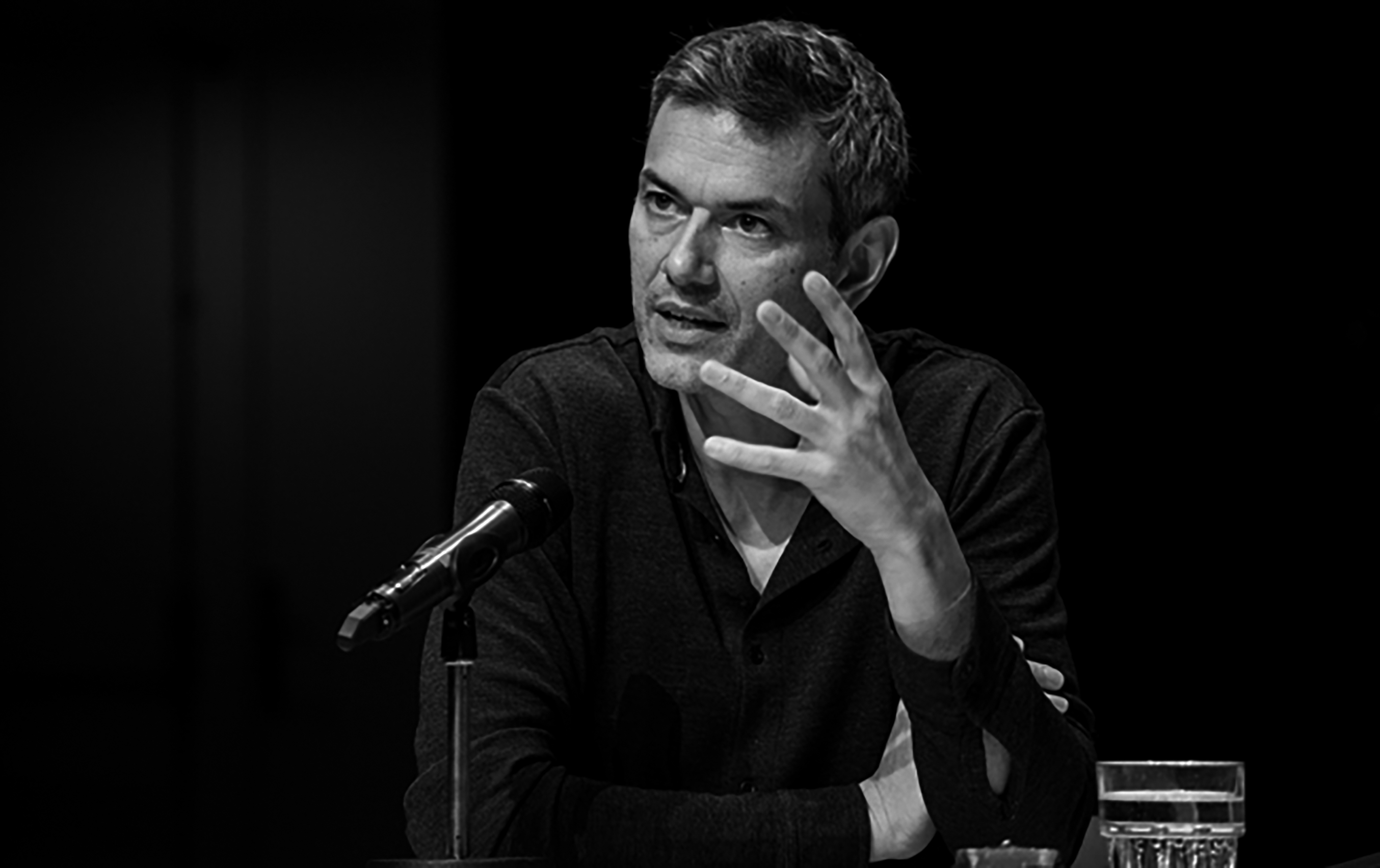
Born in Spain, Chus Martínez studied philosophy and art history. She is currently director of the Art Gender Nature Institute of the Academy of Art and Design at the University of Applied Sciences and Arts of Northwestern Switzerland (FHNW), in Basel, and associate curator of TBA21—Thyssen-Bornemisza Art Contemporary.
He is a member of the board of directors of the International Committee for Museums and Collections of Modern Art (CIMAM) and serves on the advisory boards of several international art institutions, including SAHA Association (Istanbul), De Appel (Amsterdam) and the Deutsches Historisches Museum (Berlin). She has been chief curator of El Museo del Barrio (New York) and head of the dOCUMENTA department (13). She previously held the positions of chief curator of the Barcelona Museum of Contemporary Art (MACBA) and director of the Frankfurter Kunstverein. Throughout his career, he has organized numerous exhibitions and published publications with leading contemporary artists. She also carries out an intense activity as a speaker and is the author of critical essays, texts for catalogs and articles published regularly in specialized international journals.
Among his most recent exhibitions are the Danish Pavilion at the 61st Venice Biennial (2026), with the artist Maja Malou Lyse; A Velvet Ant, a Flower and a Bird, at the Potter Museum of Art in Melbourne (2026); Pedagogies of War, with artists Roman Khimei and Yarema Malashchuk, at the Thyssen-Bornemisza National Museum and TBA21 (2025); The Oracle, corresponding to the 36th Ljubljana Graphic Arts Biennial (2025); Clear, Lucid, and Awake, at Art Sonje Center (Seoul, 2025); Stephanie Comilang: Search for Life, at the Thyssen-Bornemisza National Museum (2024); Double my loves, at Collegium (Arévalo, 2023); Living in Joy, at Art Sonje Center (Seoul, 2023); and Mathilde Rossier, at the Fondation Pernod Ricard (Paris, 2023).
His most recent publications include The Complex Answer. On Art as a Nonbinary Intelligence (Sternberg Press, 2023); Like This. Natural Intelligence as Seen by Art (Hatje Cantz, 2022); Coding Care (co-edited with Sabine Himmelsbach, Hatje Cantz, 2022); Corona Tales. Let Life Happen to You (Lenz, 2021); and The Wild Book of Inventions (Sternberg Press, 2020).


.jpg)


