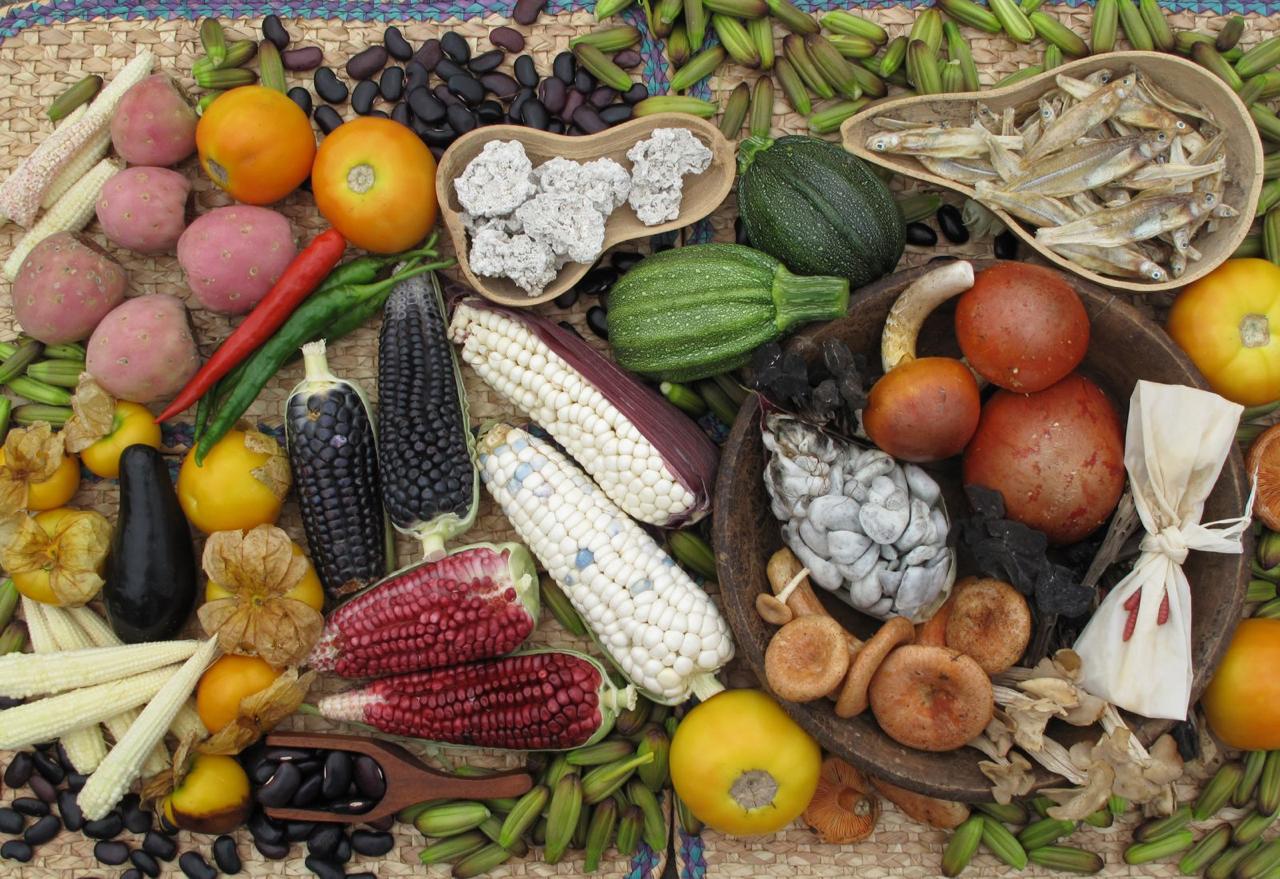
El Ombligo de Maguey, o cómo entender la Ciudad de México desde sus ecosistemas alimentarios
Activity organized by collectivo amasijo and The Gramounce
“Habitar el museo”, the Museo Tamayo's public program, seeks to expand the conversation about hospitality, the public and other ways of collaborating. The program is built with the participation of contemporary art projects focused on processes and beyond exhibition halls.
The first project that the Museo Tamayoreceives, through “Habitar el museo”, is the educational program “El Ombligo de Maguey, o cómo entender la Ciudad de México desde sus ecosistemas alimentarios", organized by the colectivo amasijo and The Gramounce. In this context, the museum invites anyone interested to participate in two activities: a conversation with researcher Mauricio Ávila Serratos and the screening of two audiovisual works that refer to how artistic practice also archives the living memory of our relationship with food, which can be one of tenderness, care or “pain”.
A group of art, curatorship and anthropology professionals from different countries make up the collective program amasijo and The Gramounce. They are dedicated to researching the food ecosystems of Mexico City—formerly called the navel of the moon. Once upon a time, the region where the city is located was a water network that connected desert peoples with highland forests; from scrub to mesophilic forests, and rainforests.
The group will visit the ecosystems of Texcoco, Xochimilco, Milpa Alta and Chapultepec to learn about the territory where waters, mountains, volcanoes and the foothills have been key. As his approach points out, “it took 500 years for a conception of progress to dry up our city, colonized by a culture that does not seem to understand its link with water and that has generated the highest demographic concentration in the country. It is only thanks to the people who have remained guardians of ancient knowledge, seeds and practices — keeping alive a reciprocal relationship with the earth — that we can still count on the food system we have. It's important to connect with these different understandings and, above all, to offer them gratitude.”
Program
Saturday, January 17, starting at 2:30 p.m.
Traditional food from Mexico City
Talk with Mauricio Ávila Serratos
Screening of the films Titixe y Guía Toó. and Montaña poderosa
Colectivo amasijo. It stems from the act of cooking collectively. It seeks to actively reflect on daily life, the interdependence between food, language and territory, understanding food as a network of interrelationships. His research focuses on recognizing diversity and, through it, rethinking the culture of scarcity. His work is based on an understanding of the interconnected cycles of the biosphere and the anthroposphere. The collective listens to non-dominant narratives, from people closely linked to the earth, to measure the true cost of climate change and build paths to Earth's regeneration. Their practice is expressed through workshops, exhibitions, markets, educational activities and collective celebrations. Recognition of the body as a cognitive entity is a constant in their work.
The Gramounce. Organization established in Amsterdam that reconceptualizes the world through food. They establish food as a legitimate discipline in the arts and a valid vehicle for constructing meaning. They defend the idea that food is fundamental, the essential part of any world-building exercise. Through it, the objective is to establish food and cuisine as inherent signifiers of human culture. Distinguishing between food is crucial because food and its systems build today's ecological terraforming. Through studies, they develop frameworks that rethink the role of food in culture, aesthetics and the creation of meaning. They provide a platform for in-depth research on food as an artistic and intellectual discipline.


.jpg)


